Healthy foods still need portions
Nuts, avocado, olive oil, granola, and bowls can be excellent choices and still overshoot your target.

Food quality matters, but portions decide whether a healthy meal supports your goal or quietly pushes you past it.

01 / Portions
Why healthy foods still need portions
It is easy to assume that "clean" food is automatically weight-loss food. A bowl with olive oil, nuts, avocado, grains, and dressing may be nutrient-dense, but it can also be much higher in calories than expected.
This does not mean the meal is bad. It means the label "healthy" answers a different question than "does this fit my current energy target?" [2] Nuts, olive oil, avocado, granola, trail mix, smoothie bowls, and restaurant salads can all support a good diet. They can also add up quickly because they are calorie-dense and easy to pour, scoop, or drizzle without noticing.

02 / Portions
The portion problem is usually invisible
Most portion drift happens in small, reasonable-looking moments: an extra tablespoon of dressing, a heavy pour of oil, a second handful of nuts, more granola because the bowl looks empty, or a smoothie that becomes a meal plus dessert. None of those choices are dramatic, so they do not feel like the reason progress is slow.
The easiest fix is not to turn every meal into a math test. [1] Start by identifying the foods that are dense enough to move your day: oils, nut butters, nuts, seeds, cheese, granola, dried fruit, creamy sauces, and large grain portions. These are the items worth measuring for a short learning period.
03 / Portions
A simple plate structure that works
A practical plate starts with enough protein to make the meal satisfying. Add a large volume of vegetables or fruit, then choose a carbohydrate portion that matches your activity level. Finish with fats intentionally instead of accidentally.
For many people, a visual starting point is one to two palms of protein, one fist of carbohydrates, one to two fists of produce, and one thumb-sized portion of added fat. That is not a universal rule, but it gives you a baseline. After a week or two of tracking, your own data will tell you whether the portions need to move up or down.

04 / Portions
Common healthy foods that surprise people
Granola is often treated like cereal, but many servings are much smaller than the bowl people actually pour. Nuts are nutritious, but a casual handful can be several hundred calories. Olive oil is heart-healthy, but two heavy pours can change the entire meal. Smoothie bowls can contain fruit, nut butter, protein powder, milk, toppings, and honey, which makes them closer to a full meal than a light snack.
The goal is not to fear these foods. The goal is to stop giving them an unlimited budget just because they have a wellness halo.
05 / Portions
How to adjust without making meals smaller and sadder
When a meal is overshooting your target, look for swaps that keep volume high. Use a measured amount of dressing and add lemon, vinegar, herbs, or salsa for flavor. Keep avocado, but use a quarter instead of a whole one. Choose one main fat source instead of stacking oil, nuts, cheese, and creamy sauce in the same bowl.
You can also add more low-calorie volume: leafy greens, cucumber, tomatoes, berries, mushrooms, zucchini, broth-based soups, or roasted vegetables. This keeps the plate generous while making the calorie math easier. [1]
06 / Portions
How CrosWeight helps you learn your real portions
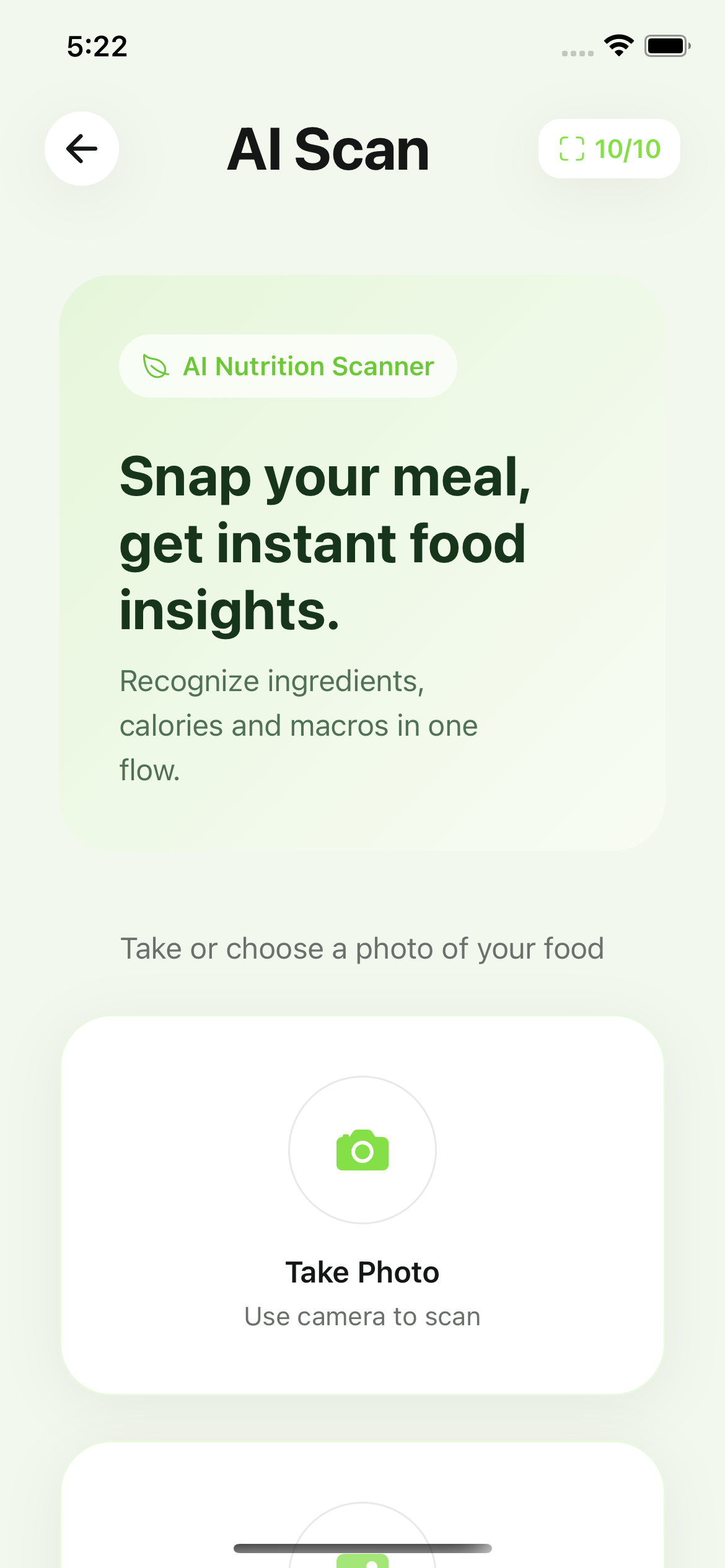
Photo logging helps you catch portion drift without stopping your day. CrosWeight gives you a quick estimate so you can learn what your usual bowls, snacks, and restaurant meals actually add up to.
Over time, the useful question becomes less "was this food healthy?" and more "how does this portion usually affect my day?" That is the difference between guessing and adjusting. Once you know your patterns, you can keep the foods you like and change the amounts with much less friction.
Try this week
Turn the idea into a 7-day experiment
Pick one behavior from this article and test it for a week before changing anything else. Nutrition gets confusing when every variable moves at once. Keep your meals familiar, log them consistently, and look for the pattern that repeats.
At the end of seven days, compare your average intake, hunger, energy, and weight trend. If the trend is moving in the right direction, keep going. If it is not, make the smallest adjustment that targets the actual bottleneck instead of restarting with a stricter diet.
CrosWeight note
Where CrosWeight fits
The app is most useful when you want less friction between eating, logging, and learning. In this guide, that means:
- Estimate portions from photos
- Learn calorie density visually
- Keep nutrient-dense meals aligned with your goal
Sources