


From Photo to Perfect Health
Our AI transforms your meal photos into actionable health data in seconds
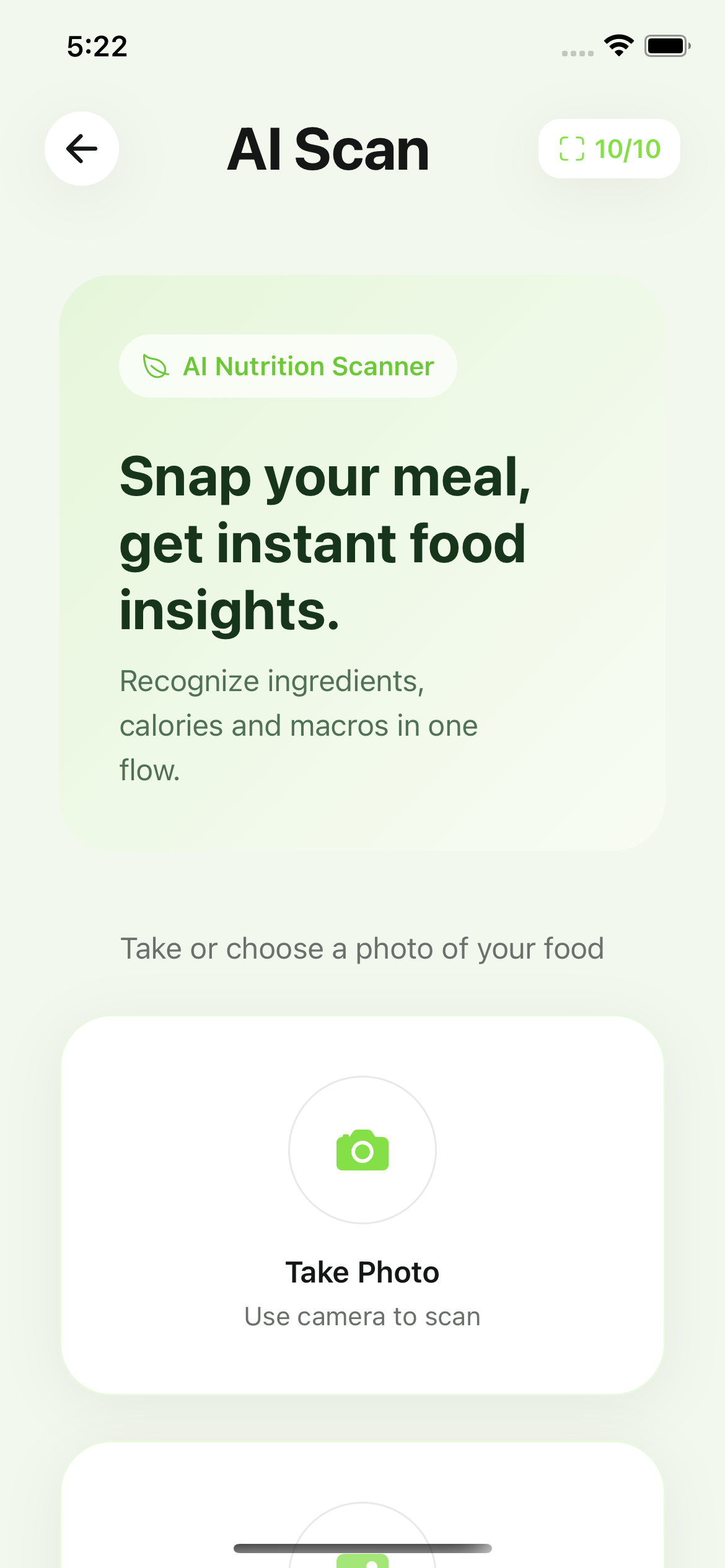
1. Snap Photo
Take a quick photo of your meal with your phone camera
2. AI Analyzes
Advanced AI recognizes food items and calculates exact nutrients
3. Get Insights
Receive personalized health recommendations instantly
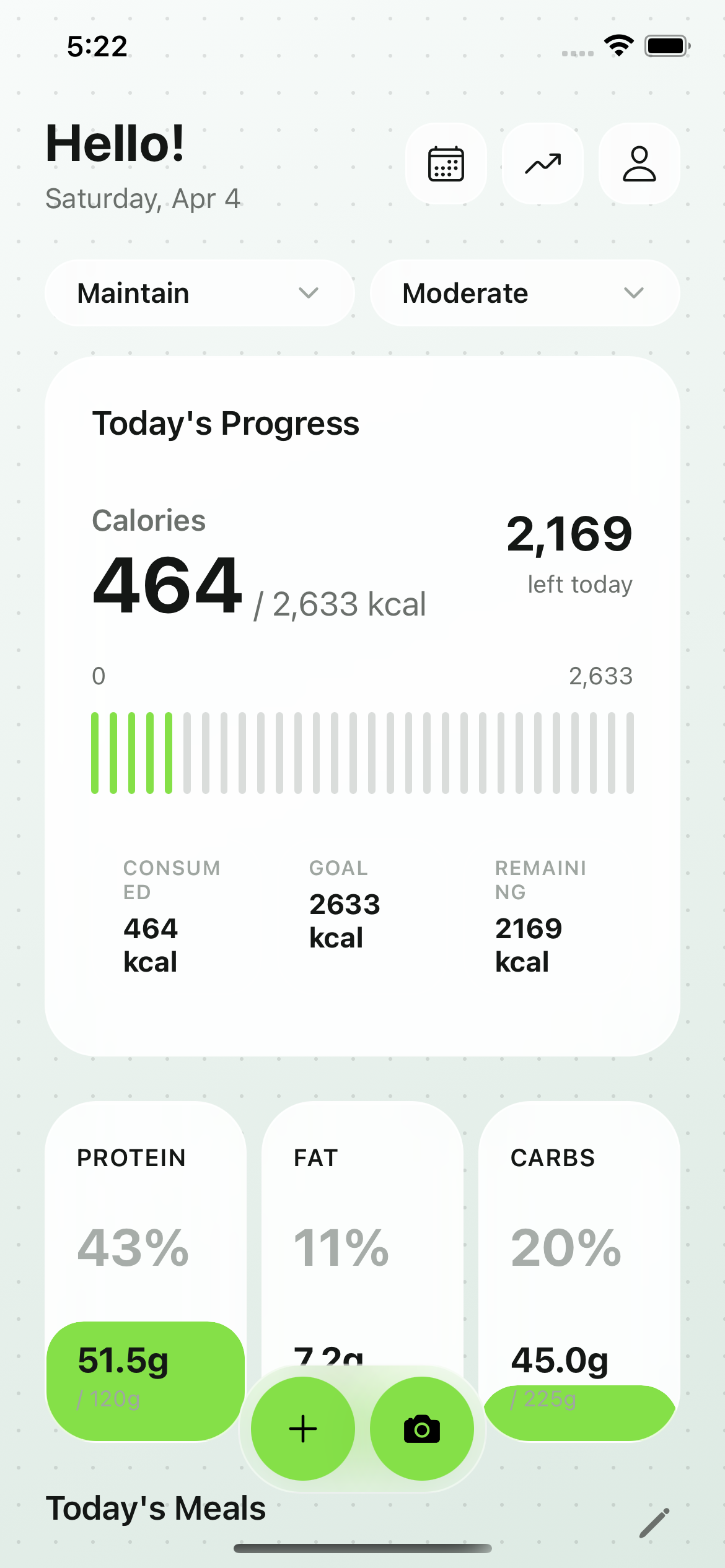
Track Your Progress
Daily Goal
Keep it going!
On track to goal
The Engine
Built on the antigravity stack. Faster than thought, accurate by design.

Quinoa Salad Bowl
Real-time processing speed from snap to macro breakdown.
Zero-Data Training
Your personal nutrition data is never used to train our public models.
Calories Tracked
Pounds Lost
App Rating
Goal vs Reality
See exactly where you are vs. where you should be. Get AI-powered insights to close the gap.
Weight Progress
3 lbs behind goal
Adjustable with minor changes
167 lbs
Current
AI Coach Insights
Personalized for your journey
Increase protein by 15g/day
Your evening protein intake is 23% below target. Add a post-dinner snack like Greek yogurt.
Weekend calorie spike detected
Saturdays average +400 cal over goal. Plan a lighter Friday dinner to offset.
Adjust goal timeline
At current pace, you'll hit 165 lbs by Week 14 instead of Week 12. Stay consistent!
Not diet tips.Nutrition signals.
CrosWeight articles turn common dieting confusion into measurable signals: intake, portions, protein, weekly averages, hidden calories, and the habits that actually move a trend line.
0.01
Generic tips
4
Macro advice
10
CrosWeight
11
Guides
8-9m
Avg read
10
Sources
Simulate your habits
See what changes the weekly average
Signal score
91
Weekly intake pattern
Article topics mapped to behavior risk.
+420
Calories
0.8g/lb
Protein
1.2x
Portions

10 min read
Beyond calorie fear: from food rules to nutrition literacy
A healthier diet is shaped by food environments, restriction, access, and routines—not just willpower. Use tracking as a feedback tool, then put the number back in context.

8 min read
Fat loss is not the same as eating as little as possible
Crash dieting often backfires because it lowers energy, increases cravings, and makes consistency harder.

8 min read
Invisible calories can quietly change your entire day
The difference between maintenance and fat loss can disappear inside cooking oil, coffee drinks, and "just a bite."
For high-intent searches
Built for the questions people ask before they download.
CrosWeight is useful when you want a calorie tracker that can estimate meals from photos, explain hidden calories, and connect nutrition data to real weight trends.
Can an AI calorie tracker estimate food from a photo?
Yes. CrosWeight turns meal photos into a fast calorie and macro estimate, then lets you review your daily nutrition pattern.
How do I know how many calories to eat per day?
Start with an estimate, track consistently, and adjust based on your weekly weight trend instead of single-day scale changes.
Why am I not losing weight even when I eat healthy?
Healthy foods can still exceed your target if portions, oils, sauces, drinks, or weekend meals are not counted.
What makes CrosWeight different from a manual food diary?
It reduces logging friction with photo-based tracking and gives feedback that connects meals, macros, and progress.
Your meals stay yours.
Zero data training. Ephemeral processing. No training set, no behavioral profile, no resale.
CrosWeight never uses your food photos or meal logs to train AI models. Unlike most large nutrition apps, whose privacy policies permit using your meal data, photos, weight history, and behavioral patterns to train recommendation systems and improve their AI, CrosWeight processes all AI recognition through ephemeral API calls with no data retention on the AI provider's side. Your photos are analyzed in seconds, the macro estimate is returned to your device, and the original image is never stored, archived, or fed back into any training pipeline.
Your meal history, weight log, and goal data live in your account so you can see trends across time — but they are never aggregated into a training set, sold to advertisers, or shared with third parties for model improvement. If you delete your account, the data is gone. That is the entire policy. Read the full Privacy Policy →
Honest answers
Real questions about AI nutrition tracking.
Straight answers about accuracy, frequency, restaurants, offline use, and when to trust software vs a human.
How accurate is AI calorie counting?
+
AI calorie counting is typically accurate within ±15–20% per meal. That sounds loose, but it works because consistency matters more than precision: tracking the same meal the same way every day reveals real trends, even if every individual estimate is slightly off. CrosWeight uses portion calibration and food recognition to keep error margins predictable, and the weekly average smooths out daily noise. For weight management, a tracker that captures 85% of your intake consistently beats a perfect tracker you abandon after three days. Pair AI estimates with weekly weigh-ins and trust the trend line, not any single meal.
What do I do when AI fails on homemade meals?
+
When CrosWeight can't identify a homemade dish — say, your grandmother's stew or a custom protein bowl — switch to manual macro entry. Tap the meal, hit edit, and enter the calories, protein, carbs, and fat directly. For repeat meals, save them as a custom template so next time it's one tap. If you only know one component (e.g. you weighed the chicken but eyeballed the rice), enter what you know and estimate the rest from a similar logged meal. Photo recognition covers ~80% of common foods; the manual fallback closes the gap without breaking your streak.
How often do I need to track to see results?
+
3–5 days of tracking per week beats daily perfection. Research on adherence shows that people who track most days but allow flexibility stick with it for months, while perfectionist daily-trackers tend to quit within 4–6 weeks. The behaviors that drive results are: weekly weight averaging, hitting your protein target most days, and noticing patterns (weekend overshoot, hidden liquid calories). You can miss a Sunday and still progress. What matters is that over a month, your logged days form a representative picture of how you actually eat.
AI calorie tracker vs nutritionist — when do I need each?
+
Use AI tracking for daily logging, portion awareness, macro balance, and trend monitoring — the high-frequency, low-stakes stuff. See a registered dietitian or nutritionist for medical conditions (diabetes, PCOS, GI disorders), pregnancy, eating disorder recovery, athletic performance programming, or if you have ten or more weeks of consistent tracking and still can't move your trend. AI handles "what did I eat and how much" — humans handle "why isn't it working" and "is this safe for my body". Most people benefit from AI alone; some need both.
When should I log meals — right after eating or end of day?
+
Log immediately after eating whenever possible. Recall accuracy drops sharply after about two hours: a 2018 study on dietary recall found people underestimated intake by 15–25% when logging end-of-day vs immediately. CrosWeight's photo capture takes ~10 seconds, which is faster than typing the meal later from memory. If you genuinely can't log mid-meal (a work lunch, a date), snap the photo discreetly and let the AI process it later — the image itself preserves the portion data your memory will lose. End-of-day batch logging is fine for repeat meals but unreliable for new ones.
How do I track calories when eating out at restaurants?
+
Restaurant meals are the hardest case for any tracker because portions and oils vary by chef. Three strategies: (1) Photo log it and accept the estimate, knowing it may be ±25% off — one inaccurate meal a week barely moves a trend line. (2) For chains, search the brand in the database for posted nutrition info. (3) For unknown dishes, log the closest match and round up by 20% to account for restaurant butter, oil, and dressings. Don't skip logging because it's imperfect — a rough estimate is more useful than a missing meal. The pattern still emerges.
Does CrosWeight work without internet?
+
Photo recognition and AI macro estimation require an internet connection because the analysis runs in the cloud. However, you can still log manually offline: open the app, enter calories and macros directly, and the entries sync to your weekly trend the next time you connect. Your existing logs, weight history, and goal data are cached locally and viewable offline. For travel or low-signal environments, log manually in the moment and let CrosWeight back-fill AI analysis later when you reconnect. Your streak and progress data never depend on connectivity.
Wall of Results.
Real athletes, real results. Join the community that's changing the game.

Sarah Mitchell
Marathon Runner
"I've tried every calorie tracker out there. CrosWeight is the first one that actually understands what I'm eating without me typing a novel."

David Chen
CrossFit Athlete
"The AI coach is brutally honest and I love it. It's like having a nutritionist in my pocket 24/7. Down 3% body fat in a month."

Emily Rodriguez
Yoga Instructor
"Design is beautiful. It makes logging food feel like less of a chore. The photo recognition is scary good."