Weekends count, even when the food feels social
Two relaxed days can erase five disciplined days if you never look at the weekly average.

Fat loss is driven by the weekly pattern. The goal is not to make weekends boring; it is to stop treating them like they live outside the plan.

01 / Consistency
Why weekends change the math
Many people eat tightly during the week and then stop tracking on weekends because meals are social. Restaurant portions, drinks, appetizers, and dessert can quickly turn a five-day deficit into a seven-day maintenance week.
This is one of the most common reasons someone feels like they are doing everything right but not seeing progress. Monday through Friday may be structured, high-protein, and predictable. Saturday and Sunday may include brunch, takeout, drinks, snacks, and larger portions. Nothing looks extreme in isolation, but the weekly average tells the truth. [1]
02 / Consistency
The weekly average matters more than the perfect weekday
Think about a simple example. If you create a 300-calorie deficit Monday through Friday, that is 1,500 calories by the weekend. Two restaurant meals, a few drinks, and a dessert can easily add that back. The result is not failure; it is maintenance.
This is why the question should not be, "was I good during the week?" The better question is, "what did my full seven-day pattern look like?" Once you start thinking weekly, weekends become easier to plan without shame or overcorrection. [1]

03 / Consistency
Do not cancel the meal you care about
A strong weekend strategy protects the meal you actually want. If dinner with friends matters, keep it. If Sunday brunch is the highlight, keep it. The mistake is letting every surrounding meal become equally loose.
Plan the anchor meal, then make the other meals simpler. A protein-forward breakfast, lighter lunch, or earlier walk can create room without making the day feel restricted. The goal is not to earn food. The goal is to spend your calorie budget on the moments that are worth it.
04 / Consistency
Restaurant calories are harder to estimate
Restaurant meals usually contain more oil, butter, sauce, sugar, and larger portions than home meals. Even a healthy-looking plate can be more calorie-dense than expected. [2] That does not mean you need to avoid restaurants, but it does mean estimates should be generous.
One practical rule: log the obvious items and add the invisible ones. If the meal was cooked in oil, had sauce, came with fries, included alcohol, or arrived in a large portion, account for that. Being roughly honest is more useful than being perfectly precise and consistently underestimating.

05 / Consistency
Build a weekend template
Templates reduce decision fatigue. For example, Saturday could be: protein breakfast, normal lunch, restaurant dinner, two drinks planned in advance. Sunday could be: high-protein brunch, easy dinner at home, walk after lunch. The details can change, but the structure keeps the day from drifting.
A good template includes three things: one meal you are excited about, one or two meals that are easy to log, and a realistic boundary around drinks or desserts. This keeps flexibility without turning the whole weekend into a blur.
06 / Consistency
How CrosWeight helps you stop guessing
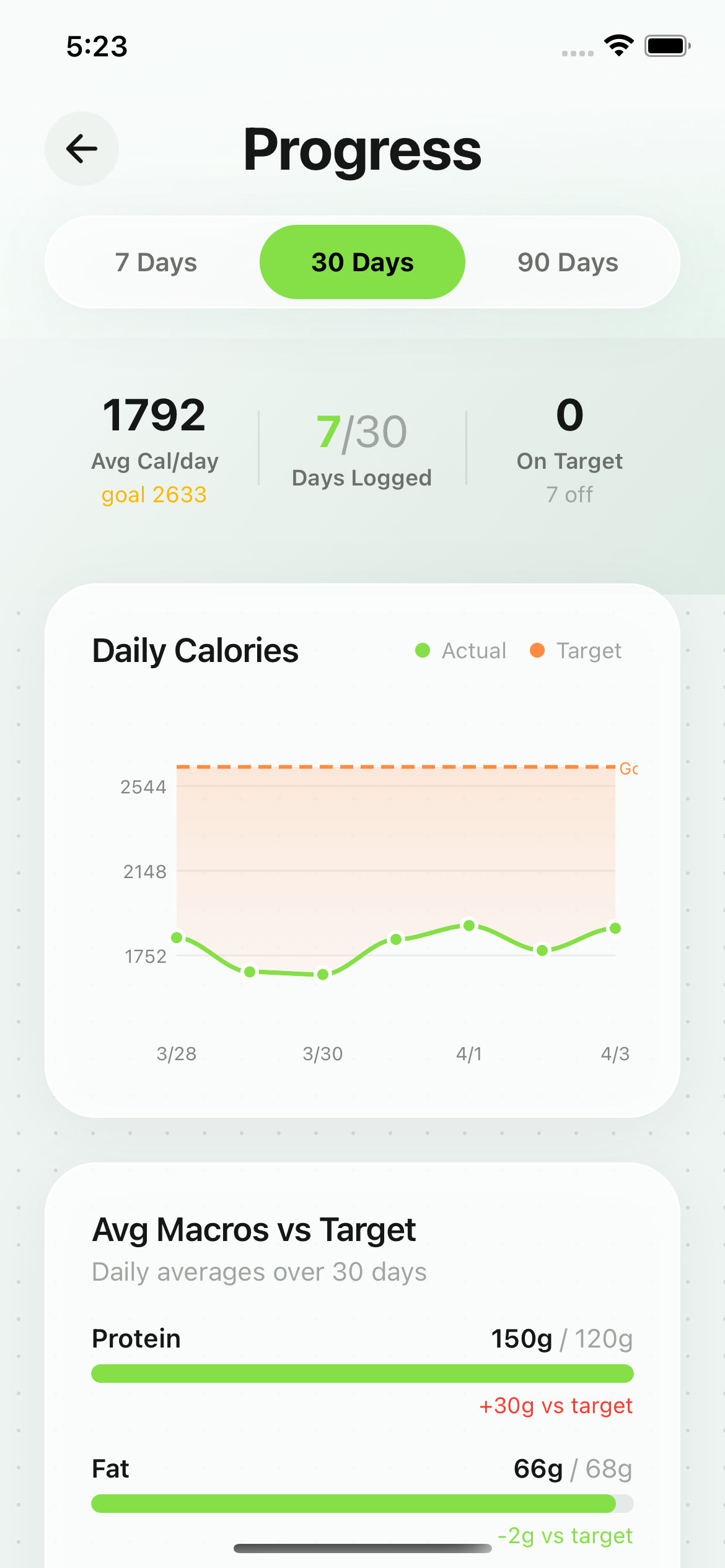
CrosWeight makes weekly averages easier to see. A high Saturday is not failure. It is information you can balance with lighter choices before or after the meal.
The app is especially helpful for weekend meals because photo logging lowers the friction. You can capture the meal, get an estimate, and move on with your night. Later, you can look at the week as a whole and decide whether the pattern supports your goal. That is much more useful than trying to remember everything on Monday morning.
Try this week
Turn the idea into a 7-day experiment
Pick one behavior from this article and test it for a week before changing anything else. Nutrition gets confusing when every variable moves at once. Keep your meals familiar, log them consistently, and look for the pattern that repeats.
At the end of seven days, compare your average intake, hunger, energy, and weight trend. If the trend is moving in the right direction, keep going. If it is not, make the smallest adjustment that targets the actual bottleneck instead of restarting with a stricter diet.
CrosWeight note
Where CrosWeight fits
The app is most useful when you want less friction between eating, logging, and learning. In this guide, that means:
- Compare weekday and weekend intake
- Plan higher-calorie meals
- Keep weekly averages visible
Sources